Your HVAC makes all sorts of noises, some more alarming than others. If you’ve noticed your AC or furnace making a popping, crackling, or a clicking noise, it might mean your HVAC is in need of service. Hearing strange sounds is one of the most common reasons people call for service.
The good news is that not every HVAC noise means there’s a serious problem, often it’s an indication of a minor issue that needs to be repaired. However, they can also be an early warning sign of a deeper problem that should be addressed by a professional, and it’s important to know the difference.
Is a Popping Sound Normal or a Warning Sign?
It’s normal for there to be some noise when your HVAC is running. Since it’s made up of metal ductwork, moving air, electrical components, and parts that heat up and cool down repeatedly, occasional sounds during startup or shutdown can be completely normal.
If there’s a popping noise doesn’t last long and only happens when the unit first kicks on, there’s usually no reason to panic. If your system isn’t having performance issues, you can simply mention it to the technician at your next service appointment when they’re inspecting your HVAC.
There are times the sounds coming from your system are cause for concern. In these cases it’s time to schedule an AC repair appointment:
- The sound is loud, frequent, or getting worse
- There is reduced airflow or performance
- The system is struggling to start or is short cycling
- There is persistent crackling or clicking during operation
The Most Common Causes of HVAC Popping Sounds
Thermal Expansion and Contraction in Ductwork
Your HVAC’s ductwork expands and contracts due to temperature and that change is usually accompanied by a popping noise. This is typically harmless and if the noise is being caused by thermal expansion, it only happens when the system first turns on or off.
Airflow Restrictions and Pressure Changes
When air can’t move freely through your system due to dirty or clogged air filters, closed or blocked vents, or restricted return air pathways, pressure begins to build inside the ducts. As that pressure increases, the metal ductwork can flex and shift slightly, creating noticeable popping sounds.
Loose or Shifting Duct Connections
Over time, ductwork connections can loosen or shift slightly behind walls and ceilings. When air pressure changes, these loose sections may move and produce popping or cracking sounds.
Ice Formation on the Evaporator Coil
If your HVAC sounds like popcorn popping, it might be a sign of ice forming inside the system. If you live in a humid environment and set your thermostat very low, ice can form on the evaporator coil. The popping sound you hear may actually be ice cracking and falling inside the unit. If this happens frequently, it might be a sign of an underlying problem with your system’s airflow or refrigerant.
Condensation or Drainage Issues
Water can sometimes enter your outdoor HVAC unit when it rains or after a particularly heavy storm. If you hear popping after some wet weather, it may be the system trying to clear the moisture. You should inspect your unit after storms to make sure debris isn’t blocking drainage.
A popping sound may also mean liquid refrigerant is entering the compressor, which can damage the unit.
Electrical or Mechanical Component Issues
Electrical components or wiring can become loose over time. When this happens, connections can fray or spark, causing popping and cracking noises. An HVAC system that consistently makes a clicking or sharp popping sound should never be ignored. This might indicate an electrical issue that can cause serious damage or pose a fire risk.
Signs Your HVAC Requires Immediate Attention
While sometimes the sounds your HVAC makes are normal, if they are paired with other symptoms, it may be cause for concern. Call a professional if you notice:
- Loud or worsening popping sounds
- Reduced airflow from vents
- Warm air when cooling is on
- Burning smells
- Water leaks around the unit
- Frequent system cycling
These symptoms often indicate a larger problem with your HVAC beyond normal duct movement or other minor issues.
What You Can Safely Check Before Calling a Professional
If your HVAC system is making popping noises, there are some things you can try before bringing in the professionals.
- Replace a dirty air filter
- Make sure all vents and registers are open
- Check for visible ice on the indoor unit
- Clear debris from around the outdoor unit
If the noise continues after you’ve done this basic maintenance and troubleshooting, it’s time to schedule an AC or furnace repair.
How Professional HVAC Technicians Help Prevent and Diagnose Popping Noises
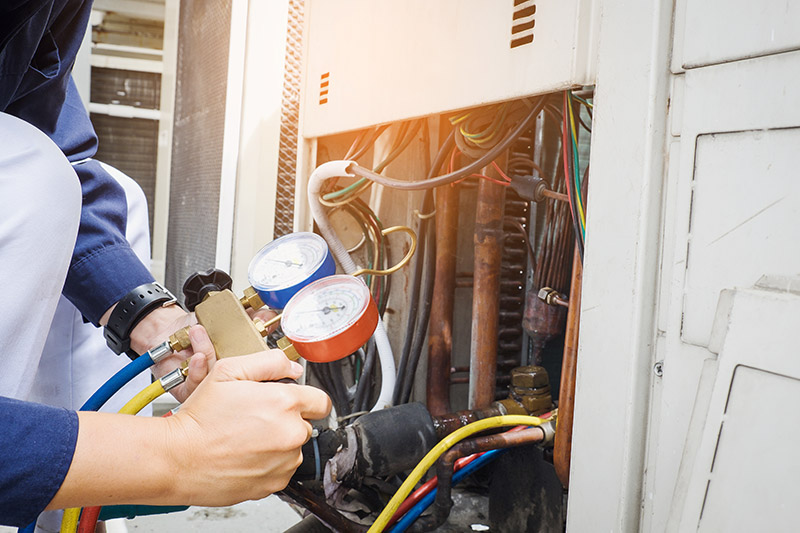
Regular HVAC maintenance is one of the best ways to prevent the issues that cause an air conditioner to make popping or crackling noises. During an HVAC tune-up, a technician will check for airflow restrictions, inspect ductwork, clean coils, clear the condensate drain, and examine electrical components for any signs of wear.
Because much of your ductwork is hidden and your HVAC system contains complex electrical and mechanical components, identifying the source or root cause of the popping noises coming from your AC or furnace requires an inspection from a trained expert.
When to Call Romano Brothers Heating and Air
Not every popping or crackling sound is serious, but unusual or persistent noises are often your system’s way of signaling that something needs attention. Addressing these sounds early can help prevent larger repairs, improve system performance, and protect your home comfort.
If your HVAC is making a popping noise that doesn’t go away after basic checks, the experienced team at Romano Brothers can help. Our technicians are trained to quickly identify the source of unusual HVAC sounds and recommend the right solution to get your system working quietly and efficiently.